
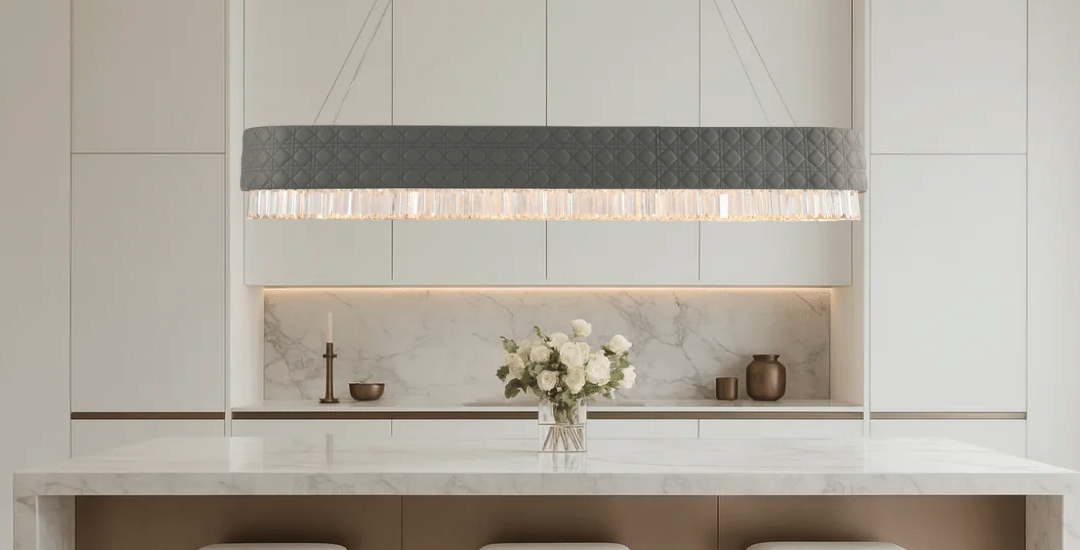
Let’s talk about the motion sensor linear chandelier for your kitchen island. The short answer to whether it’s a good idea is: yes, absolutely, with some key considerations. It’s a fantastic blend of modern convenience and sophisticated design that can elevate your kitchen’s functionality and aesthetic. But like anything, it’s not a one-size-fits-all solution, and understanding the nuances will help you decide if it’s the right fit for your home.
Why a Motion Sensor Chandelier? Beyond Just On/Off
A motion sensor linear chandelier isn’t just about saving a few steps to the light Hpslights switch. It’s about creating a more intuitive and comfortable kitchen experience. Think of it as lighting that anticipates your needs, rather than waiting for your command. This technology, when applied thoughtfully to kitchen island lighting, offers a unique blend of practicality and luxury.
Convenience at its Core
Imagine walking into your kitchen, hands full of groceries, and the island light softly illuminates as you approach. No fumbling for a switch, no awkward dark moments. This is convenience personified. It’s particularly useful for those late-night snacks or early morning coffee runs when you’re not fully awake yet.
Energy Efficiency You Can See
While the “wow” factor is undeniable, the energy-saving aspect is equally compelling. Lights that turn on only when needed, and off when the space is vacant, contribute significantly to reducing your electricity bill. This isn’t just about being eco-conscious; it’s about smart home management.
A Touch of Modern Sophistication
Beyond the practicalities, a motion sensor chandelier adds a layer of modern sophistication to your kitchen. It speaks to a home that embraces smart technology seamlessly, without sacrificing style. It’s a subtle nod to the future, integrated into everyday living.
Understanding the Technology: How Motion Sensors Work
Before you dive into shopping, it’s helpful to understand the basic mechanics behind these intelligent fixtures. There are a couple of main types of motion sensors commonly used, and each has its own characteristics.
Passive Infrared (PIR) Sensors
Most common are PIR sensors. These detect heat changes in their field of view. When a warm body (like a person) moves into the sensor’s range, it registers a change in infrared energy and triggers the light.
- Sensitivity: PIR sensors can be adjusted for sensitivity, which is crucial in a kitchen. You don’t want your cat walking by to trigger the lights constantly, nor do you want to wave your arms frantically to get them to turn on.
- Line of Sight: PIR sensors require a clear line of sight. If there are obstructions between the sensor and where people will be, it might not trigger reliably.
- Temperature Considerations: In very hot kitchens, or if the sensor is directly exposed to heat sources, its performance can sometimes be affected, as it’s looking for temperature differentials.
Microwave Sensors
Less common but increasingly used, microwave sensors emit microwave radiation and detect changes in the reflected signal. This allows them to “see” through thinner materials and detect motion even without a direct line of sight.
- Broader Coverage: Microwave sensors typically offer broader and more consistent coverage than PIR sensors.
- Potential for False Triggers: Due to their sensitivity, they can sometimes be more prone to false triggers from motion outside the intended area, though modern versions are much improved.
Sensor Placement and Integration
The effectiveness of your motion sensor chandelier largely depends on the sensor’s placement. Is it integrated directly into the light fixture, or is it a separate component?
- Integrated Sensors: These are often sleek and discreet, blending seamlessly into the design of the chandelier. However, their fixed position means you have less control over the detection zone.
- Adjustable Sensors: Some higher-end models might offer an adjustable sensor head, allowing you to fine-tune the detection angle and range. This is a significant advantage for optimizing performance.
Design and Aesthetics: Beyond Just Function
While the motion sensor is a functional perk, the chandelier itself still needs to be a beautiful centerpiece for your kitchen island. “Effortless elegance” isn’t just about the automation; it’s about the entire visual package.
Linear Design: The Ideal Kitchen Island Form
Linear chandeliers are almost custom-made for kitchen islands. Their elongated form mirrors the shape of the island, providing balanced and even illumination across the entire workspace. This avoids hot spots or shadowy areas, which can be an issue with single pendant lights or traditional chandeliers.
- Proportionality Matters: The length of your linear chandelier should be proportionate to the length of your island. A good rule of thumb is that the fixture should be about two-thirds to three-quarters the length of the island.
- Visual Balance: Consider the visual weight of the fixture. A very chunky or heavy-looking chandelier might overwhelm a smaller island, while a delicate one could look lost on a grander scale.
Material Choices: Setting the Tone
The materials used in your chandelier play a huge role in its overall aesthetic.
- Metals: Brushed nickel, polished chrome, matte black, and brass are popular choices. Brushed finishes offer a softer, more contemporary look, while polished metals can add a touch of classic glamour. Matte black is very on-trend for modern and industrial styles.
- Glass: Clear, frosted, or seeded glass shades can diffuse light beautifully. Clear glass offers maximum brightness, while frosted or seeded options provide a softer, more ambient glow.
- Wood Accents: For a warmer, more organic feel, some linear chandeliers incorporate wood elements, perfect for farmhouse, Scandinavian, or rustic modern kitchens.
Style Integration: Matching Your Kitchen’s Personality
Your chandelier should complement your existing kitchen decor, not clash with it.
- Modern & Contemporary: Look for clean lines, minimalist designs, and metallic finishes. Integrated LED lighting often features here, offering a sleek, low-profile look.
- Industrial: Exposed bulbs, metal cages, and raw finishes like matte black or bronze are characteristic.
- Farmhouse & Rustic: Consider wood accents, seeded glass, and distressed metal finishes.
- Transitional: This style blends traditional and contemporary elements, offering a versatile range of options that aren’t too stark or too ornate.
Practical Considerations for Installation and Use
Installing a motion sensor linear chandelier isn’t significantly different from a standard chandelier, but there are some additional setup steps and considerations to ensure optimal performance.
Wiring and Power Requirements
Most motion sensor chandeliers will operate on standard household wiring. However, some advanced models might require specific wiring for features like dimming or network integration.
- Dedicated Circuit: For larger or more complex fixtures, it’s always a good idea to check if a dedicated circuit is recommended.
- Professional Installation: If you’re not comfortable with electrical work, hiring a licensed electrician is highly recommended to ensure safety and proper functionality.
Adjustable Settings: Crucial for Kitchen Environments
This is where the “effortless” part truly comes into play. A good motion sensor chandelier will offer adjustable settings to fine-tune its behavior.
- Detection Range: You’ll want to set the range so it covers your island work area effectively without triggering from people just passing through a nearby doorway.
- Sensitivity: This setting determines how easily the sensor is triggered. In a busy kitchen, you might want a lower sensitivity to avoid constant activation.
- Hold Time: This is the duration the light stays on after motion is no longer detected. For a kitchen, a hold time of 5-15 minutes is usually ideal. Too short, and you’ll find yourself waving at the light; too long, and you lose some energy efficiency.
- Ambient Light Sensor (Daylight Harvest): Many motion sensors include a photocell that prevents the light from turning on if there’s already sufficient natural light. This is a fantastic energy-saving feature. You can usually adjust the LUX level at which the light will activate.
Dimming Capabilities: More Than Just On/Off
A motion sensor doesn’t mean you lose dimming functionality. Many modern fixtures integrate dimmable LEDs.
- Integrated Dimming: Some systems allow the motion sensor to trigger the lights at a preset dimming level, or even gradually fade on/off.
- Smart Home Integration: For the ultimate control, look for chandeliers that can integrate with smart home systems (like Z-Wave, Zigbee, or Wi-Fi). This allows for app control, voice commands, and the creation of complex lighting scenes, even overriding the motion sensor when desired.
Potential Challenges and How to Address Them
While the benefits are clear, it’s important to be aware of potential hiccups and how to mitigate them. No technology is perfect, and anticipating issues can save you frustration.
False Triggers and Over-Sensitivity
One of the most common complaints with motion sensors is false triggers.
- Pets: A large dog or even an agile cat can sometimes set off PIR sensors, especially if their typical path crosses the sensor’s detection zone.
- Air Currents/Heat Vents: Strong drafts or heat coming from vents or even a working oven can sometimes cause subtle temperature fluctuations that trick a PIR sensor.
- Reflective Surfaces: In some cases, highly reflective surfaces near the sensor can cause issues.
Solutions for False Triggers
- Adjust Sensitivity: This is your first line of defense. Reduce the sensitivity until only human motion reliably triggers it.
- Adjust Detection Angle/Range: If possible, modify the sensor’s angle or use masking tape on the lens (for some PIR sensors) to narrow its field of view.
- Relocate/Re-orient: If the sensor is separate, consider relocating it. If integrated, you might need to adjust the fixture’s position slightly if false triggers are consistently coming from one direction.
- Microwave vs. PIR: If you’re constantly battling false triggers with a PIR sensor, a microwave sensor might be a more suitable (though potentially more expensive) option, as they are less susceptible to heat variations.
Under-Sensitivity or Failure to Trigger
Equally frustrating is when the light doesn’t turn on when you need it to.
- Obstructions: Ensure there’s a clear line of sight for PIR sensors.
- Incorrect Placement: The sensor might not be positioned to cover the main activity zones around your island.
- Low Battery (if applicable): While most linear chandeliers are hardwired, if you’re using a battery-operated external sensor, check its charge.
- Hold Time Too Short: If the light turns off while you’re still working, increase the hold time setting.
Solutions for Under-Sensitivity
- Increase Sensitivity: Gradually increase the sensitivity until it reliably detects motion.
- Broaden Detection Angle: If possible, adjust the sensor to cover a wider area.
- Check for Obstructions: Ensure no cabinets, appliances, or even tall people are routinely blocking the sensor’s view.
- Consider a Second Sensor: For very long islands or complex kitchen layouts, you might benefit from two sensors (if the system supports it) or even a smart home integration that allows multiple sensors to control the same light.
Integration with Existing Smart Home Systems
If you already have a smart home setup, you’ll want to ensure your new chandelier plays nicely with it.
- Compatibility: Check for compatibility with platforms like Amazon Alexa, Google Home, Apple HomeKit, Samsung SmartThings, etc.
- Hub Required: Some smart lights require a dedicated hub to function, while others connect directly via Wi-Fi. Factor this into your decision and budget.
- Control Overrides: Can you manually override the motion sensor via an app or voice command if you want the light on continuously for a party, for example? This flexibility is key.
The Verdict: Is It Right for Your Kitchen?
A motion sensor linear chandelier for your kitchen island is more than just a novelty; it’s a practical upgrade that marries convenience, energy efficiency, and modern design. It’s particularly well-suited for:
- Busy Households: Where hands are often full, and quick, intuitive lighting is a blessing.
- Open-Concept Spaces: Where defining zones with lighting can enhance flow.
- Tech-Forward Homes: For those who appreciate smart solutions that simplify daily life.
- Energy-Conscious Individuals: Who want to minimize wasted electricity.
However, consider your specific kitchen layout, the presence of pets, and your comfort level with adjusting settings. With careful selection and thoughtful installation, an “effortless elegance” motion sensor linear chandelier can truly transform your kitchen into a smarter, more inviting, and beautifully lit space. It’s a statement piece that works as hard as you do, offering light exactly when and where you need it, without you having to lift a finger.